- The Lemonade Stand
- Posts
- Is creative burnout actually a thing?
Is creative burnout actually a thing?
Your weekly refreshment. Straight from the stand. - Notes from a builder, marketer, and designer

Emily Antonino
July 09, 2025
There’s this Tyler the Creator interview that’s been on my mind ever since I saw it. He talked about what it’s like to be a creative who can’t turn their brain off. Constantly jumping between ideas and projects because you love it, not because you’re burning out.
“I don’t get burnt out because it’s all I wanna do.”
I related to that hard. For some of us, the work feels like play, which is why we keep going. But not everyone sees it that way. To them, it might look like burnout, even when it’s not. Don’t let someone else decide when you should be burnt out, but pay enough attention to know when you really are.
For me, when a project feels all consuming, that’s usually a good thing. It means I care. The hard part is knowing when all consuming crosses into something unhealthy. I think that comes down to being intentional and paying attention.
Healthy intensity: when you’re deeply engaged because you genuinely care and the work excites you.
Unhealthy intensity: when you’re just grinding, avoiding other things, or pushing yourself because you feel you “should” rather than because you actually want to.
If the intensity comes from genuine excitement and connection to the work, it’s usually good fuel. But if you’re just grinding to avoid something else, or pushing yourself because you feel like you should, that’s when it starts to turn. That’s why I try to pay attention to the why behind it. If it still feels like mine, I keep going. If it doesn’t, I know it’s time to step back.
Creative burnout happens when the intensity stops feeling healthy and you lose sight of why you’re doing it in the first place.
📑 Studio Notes
Field notes from a builder, marketer, and designer
What’s Your Work Really Worth?
"Everybody want something. You know the price of everything but the value of nothing."
This line has been living in my head all week. I kept thinking about what it really means to know your value, and how often we undersell it without even realizing. Especially when it comes to how we price our work, focusing on time instead of the value of what we’re actually doing, building, and creating.
I used to think hourly rates were just how it worked. You do a thing, you get paid for the time it took. Simple. But If you can crank out high-quality work fast. Like, faster than what’s considered normal. Suddenly, hourly doesn’t really make sense anymore. It starts to penalize you for being efficient.
If you’re great at what you do and can do it fast, don’t sleep on that. Good companies will recognize it and want to invest in you. The others… probably aren’t worth working with anyway. 99% percent of the time those ones end up being nightmare clients.
Fast and good is rare. Charge accordingly.
You hear that?… That’s the sound of the price going up.
🔖 Bookmarks & Brain Fuel
What’s fueling my brain this week. A few things I saved, clicked, and couldn’t stop thinking about.
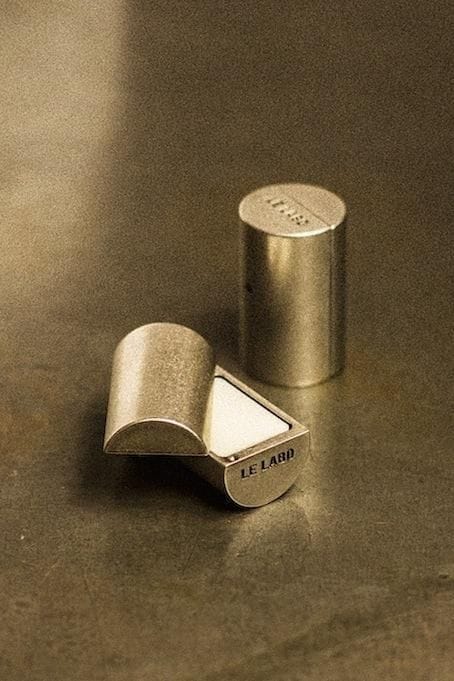
Le Labo Solid Perfume Holder
If you follow me on substack you may have seen me post about this a few days ago.
This is one of my favorite little objects I’ve stumbled across. Le Labo’s solid perfume holder. Heavy, minimal, quietly beautiful. They don’t scream for attention, but when you hold one, you get it.
It’s machined from metal and feels industrial, but in a way that still feels thoughtful. The weight in your hand makes it feel like it was actually meant to be held, not just looked at. Over time it starts to develop a patina, picking up little scratches and soft edges. It wears in instead of wearing out, which is kind of the point.
The slide or swivel mechanism feels almost like a Zippo lighter. Mechanical, satisfying, and just a little addictive to fidget with. You don’t just open it. You interact with it.
That’s the thing about these designs: they make the object itself feel collectible, not disposable. The case becomes part of the ritual. You don’t just wear the perfume. You experience it. Which, to me, is what real luxury looks like. Not louder or flashier, but more intentional design.